Inventory Management
Procurement
Method Pay
Analytics & Reporting

Dental offices don't talk about "procurement." They talk about ordering supplies, managing inventory, dealing with reps, and chasing down invoices.
Procurement is just the word that ties all of that together.
Still, having a name for it matters, because it means you can actually manage it as a system instead of a collection of separate headaches.
That system has six steps. Most practices do some version of all of them, but without a defined process, each one tends to generate its own friction which results in myriad problems. That includes expired products no one noticed, orders placed without approval, invoices paid at prices that no longer match what was agreed.
The practices that get control of their supply spend aren't necessarily buying from different vendors or negotiating harder. They're just running the process better.
Here's what that looks like end to end.
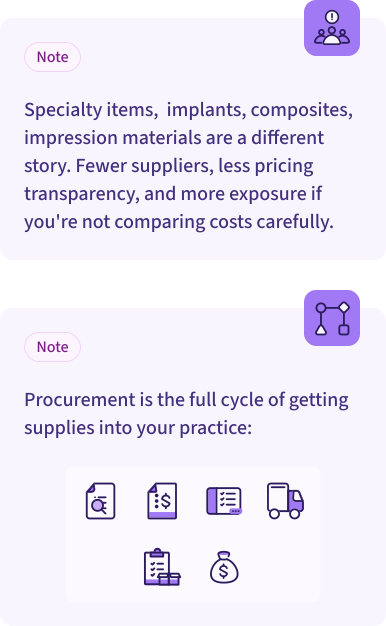
Procurement is the full cycle of getting supplies into your practice:
It also includes supplier relationship management, inventory control, and compliance, whether that means internal purchase approvals or making sure your vendors are honoring the prices they quoted.
For dental practices specifically, procurement is complicated by the variety of products involved. PPE and everyday disposables are easy to source from multiple suppliers. Specialty items, implants, composites, impression materials are a different story. Fewer suppliers, less pricing transparency, and more exposure if you're not comparing costs carefully.
A good procurement process starts with knowing exactly what you have. Today, efficient dental procurement platforms use barcode scanning to make this practical. Rather than manual recording of what supplies need to be ordered, your team can scan items directly to their cart to build their list.
Others opt for a full scan-in, scan-out system which means you’re keeping your digital stock accurate in real time.
Whichever method you opt for, it largely operates the same way. The scanning workflows that work best in dental offices are simple: an iPad or tablet stays open in the supply room with a barcode scanner nearby. Need to reorder something? Scan it. Received a shipment? Scan it in.
The system updates automatically, and you always know what's on the shelf.
Before you order, you need to know you're getting a fair price. That means requesting quotes from multiple suppliers, not just your primary rep, and comparing them.
This is where dental practices can lose thousands if not tens of thousands of dollars annually. When you're comparing quoted prices against web prices, suppliers will often beat their online pricing when asked directly. A platform that tracks quoted prices separately from web prices , and applies the quoted rate to your purchase order automatically, protects you from paying more than you negotiated.
Private label products are also worth examining closely. They're often identical to branded counterparts at a fraction of the cost. A branded impression material mixing tip might run $60 for 48 units. The private label equivalent: around $25 for the same quantity. Seeing those comparisons side by side (and being able to swap products across your formulary in a few clicks) is the kind of data that changes your spend without changing your suppliers.
Once you've identified your suppliers, the next step is managing how orders get placed. In smaller practices, it's tempting to skip this step. Someone notices you're low on gloves, they call the rep, done. The problem is that approach produces inconsistent ordering, no paper trail, and no way to enforce preferred products or pricing.
A formal request and approval process, even a lightweight one, gives practice leaders visibility before money goes out the door. It also supports formulary compliance: making sure your team is ordering from your approved product list rather than defaulting to a supplier or product that costs more.
Once a request is approved, a purchase order goes to the supplier. The purchase order matters more than most practices realize. It's a binding document that locks in the price, quantity, and delivery expectations at the time of ordering.
If you got a quoted price of $8 per unit but the supplier's website shows $10, your PO should reflect $8. If your AP team later receives an invoice for $10, they have grounds to dispute it. Systems that automatically apply quoted pricing to purchase orders, rather than defaulting to web prices, give practices real leverage in vendor relationships.
When a shipment arrives, it gets inspected and logged. Did you receive everything you ordered? Are quantities correct? Any damage?
This step feeds directly into accounts payable accuracy. Scanning received items into your inventory management system does two things at once: it updates your stock levels and creates a receiving record that can be matched against the original purchase order and the incoming invoice. That three-way match (PO, receiving record, invoice) is what catches billing errors before you pay them.
Payment should happen only after the three-way match is complete. Compare the invoice against the purchase order and the receiving record. Are the prices what you agreed to? Did you receive what you're being billed for?
This process catches duplicate charges, pricing errors, and contract violations that would otherwise go unnoticed. Electronic invoicing and automated matching make it significantly faster than doing it manually and catching even a handful of billing discrepancies per year often more than covers the cost of the software.

Suppliers run out of product, shipments get delayed, and production lines go down. Practices that rely on a single supplier per category are most exposed. Building in at least two approved suppliers per product category gives you a backup without opening yourself up to unvetted sources.
Even trusted supplier relationships are subject to price changes. Practices with no comparison process in place tend to absorb those increases quietly, because nobody's checking. Regular competitive quoting , even when you don't switch suppliers , keeps your vendors accountable.
Many practices still manage procurement through spreadsheets or nothing at all. Without accurate data, you can't see what you're spending by category, what you're overpaying, or where your biggest savings opportunities are. You end up negotiating without knowing what a good price actually looks like.
Items like implants and private label composites have narrower supplier networks and less transparent pricing. Platforms that index products by attributes , not just names or SKUs , can surface equivalent products from multiple suppliers, including private label alternatives, so you're not defaulting to branded pricing out of habit.

Managing all six steps manually is feasible for a solo practice with a dedicated office manager. Once you have multiple providers, multiple locations, or a meaningful supply spend, the manual approach generates errors and inefficiencies that cost more than they save.
Dental procurement platforms like Method bring the full cycle into one place, digital inventory with barcode scanning, quote management, purchase orders, receiving, three-way invoice matching, and reporting.
The result is less time on procurement tasks and better visibility into where your supply dollars are going.
Practices that run an organized procurement process can conservatively reduce supply costs by 6–12% on every dollar spent. The savings come less from switching suppliers and more from having a competitive process: knowing your costs, knowing the market, and holding vendors accountable to the prices they've committed to.
Ready to see what that looks like for your practice? Request a demo.